When to Replace Your Rice Cooker: 7 Signs and How Long They Last
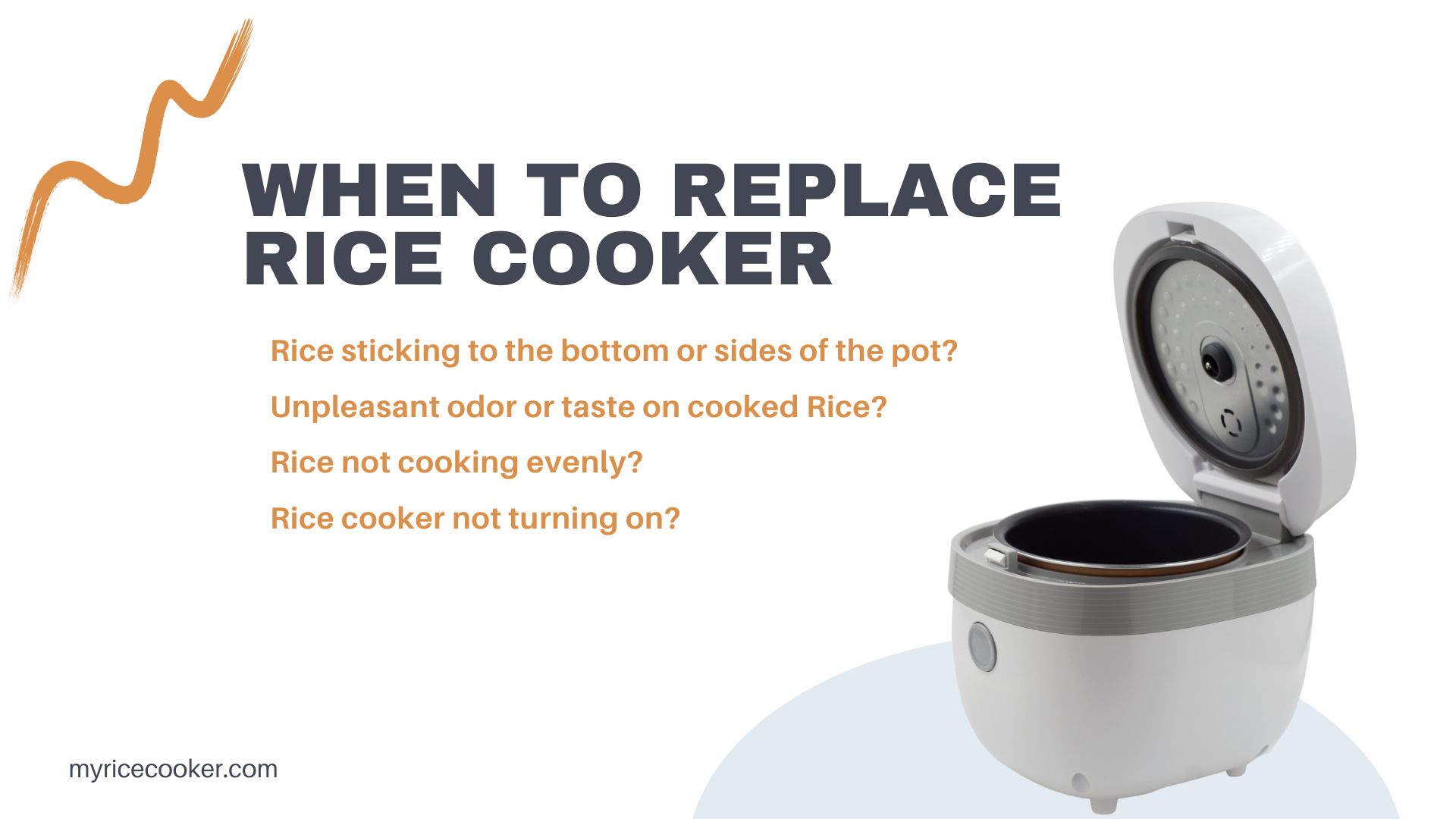
Quick answer: Replace your rice cooker when it stops heating or cooking evenly, trips the power, smells burnt, has a damaged cord or cracked housing, or the non-stick pot is flaking and a new pot is not available. If only the coating is worn, replacing the inner pot is often cheaper than replacing the whole cooker. Budget cookers often last about 3 to 5 years with regular use, and well-built models commonly last 8 to 10 years or more.
Last updated: November 1, 2026
How long does a rice cooker last?
It depends on build quality and how often you use it. As a rough guide, basic on/off cookers often last about 3 to 5 years if used daily. Fuzzy logic and induction models from established brands can run 8 to 10 years or longer, and many have replaceable parts. Daily use, hard water scale and rough cleaning shorten the life of any cooker, and these figures are typical ranges, not guarantees.
Signs it is time to replace your rice cooker
- It will not turn on or keeps tripping the outlet. Check the cord, plug and outlet first. If they are fine, the heating element or control board has likely failed.
- Rice cooks unevenly or comes out undercooked or burnt. If you have ruled out wrong water ratio and a dirty heating plate, the thermostat or sensor may be failing.
- The cooker switches to Keep Warm too early, leaving hard or crunchy rice.
- Burning smell, smoke or sparks. Stop using it at once and unplug it.
- Frayed or damaged power cord, or a cracked housing or lid. These are safety risks and are not worth repairing.
- Rust or corrosion inside, or a warped inner pot that no longer sits flat on the heating plate.
- Water or steam leaks around the lid or base.
Replace the inner pot or the whole cooker?
If the cooker still heats and cooks correctly but rice sticks, the problem is usually the coating. A scratched or peeling non-stick pot is the most common reason people think their cooker is dead. Check whether the manufacturer sells a replacement inner pot. For quality brands this is often cheaper than a new cooker. If a replacement pot costs more than about half the price of a new cooker, or none is available, replace the cooker.
Learn more about coatings in our guide to ceramic vs Teflon rice cooker pots.
Common problems and quick fixes to try first
- Rice sticks to the bottom: rinse the rice better, check the water ratio, and clean the pot. If the coating is peeling, replace the pot. See how to clean a rice cooker inner pot.
- Rice cooker overflows: reduce the amount of rice or water, rinse the rice, and do not fill past the max line.
- Bad smell or taste: wash the pot, lid and steam vent thoroughly, and descale if you have hard water.
- Uneven cooking: wipe the heating plate and the bottom of the inner pot so they make full contact, and make sure the pot sits level.
- Will not turn on: check the cord, outlet and any thermal fuse reset or lid latch.
How to make a rice cooker last longer
- Use the plastic paddle, never metal utensils.
- Wash the pot with a soft sponge and mild soap.
- Wipe the heating plate and keep the steam vent clean.
- Do not run the cooker empty.
- Do not leave rice on Keep Warm for more than a day.
Choosing a replacement
Pick a capacity that matches your household and decide whether you want a coated or coating-free pot. See our best rice cooker picks and the non-toxic rice cooker guide.
Frequently asked questions
How often should you replace a rice cooker?
There is no fixed schedule. Replace it when it fails, becomes unsafe or no longer cooks well, not by age alone.
When should you replace the rice cooker inner pot?
When the non-stick coating peels, flakes or is deeply scratched, or the pot is dented so it no longer sits flat.
Is it safe to use a rice cooker with a scratched pot?
Light scratches mainly reduce the non-stick effect. A coating that is flaking off should be replaced.




Leave a Reply